
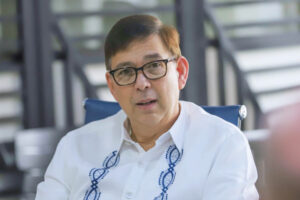
THE GOVERNMENT is focusing on delivering on its long-term socioeconomic goals, as outlined in the Philippine Development Plan 2023-2028 and Ambisyon Natin 2040, Executive Secretary Ralph G. Recto said, in response to slowing economic growth following the infrastructure corruption scandal.
At the 90th anniversary of socioeconomic planning late on Dec. 17, Mr. Recto said the administration will prioritize funding and execution of programs that aim to cut poverty to single-digit levels by 2028, expand infrastructure and strengthen resilience against global shocks.
“Let me assure you: the Marcos, Jr. administration is fully committed to delivering the Philippine Development Plan and realizing Ambisyon 2040,” he said, according to a transcript from his office. “It is one of the few things in governance that should never be up for debate.”
The economy slowed sharply in the third quarter, expanding just 4%, the weakest reading in more than four years, and the lowest since the coronavirus pandemic.
In the first nine months, growth averaged 5%, well short of the government’s 5.5%–6.5% target range.
The downturn was caused by a slowdown in government spending and weaker investor confidence after it was revealed that public works officials, legislators, and contractors conspired to deliver substandard or non-existent flood control projects.
Fiscal pressures intensified in October, when public expenditures declined for a third consecutive month to P430.6 billion, down 7.76% from a year earlier.
Mr. Recto, the former Secretary of Finance, called for a culture of planning that transcends political cycles, stressing that sustained nation-building is essential to securing economic progress for both current and future generations.
He also noted the role of evidence-based policymaking in safeguarding development gains, highlighting the progress made in reducing poverty and the impact of inclusive, data-driven planning.
He noted that poverty has fallen from 23.5% a decade ago to 15.5% in 2023 and stressed that the government is determined to push the rate down to single digits by 2028.
“We chose to believe that our development should not be dictated by political whims but by data, direction, and discipline,” he said.
“This means that years of planning have sent millions of children to school, provided millions of families with roofs over their heads, and given millions of Filipinos greater dignity in their daily lives.”
Mr. Recto, who served briefly as socioeconomic planning secretary and director-general of the National Economic and Development Authority (NEDA) in 2008, highlighted economic planners’ pivotal role in shaping a more resilient and inclusive Philippines. — Chloe Mari A. Hufana