
SCALING UP agroforestry could provide a boost to Philippine climate resiliency while raising farm incomes, the Asian Development Bank (ADB) said.
In a December paper, the ADB said agroforestry, which integrates tree planting with crop and livestock farming, can help address land degradation, declining forest cover, and food insecurity.
The bank noted that forest cover in the Philippines fell to about 24% of total land area in 2020 from 35% in 1990, largely due to agricultural expansion and unsustainable upland farming practices.
“Forest cover in the Philippines decreased dramatically, from around 10 million hectares in 1990 to about 7 million today. This loss is primarily because of large-scale deforestation and forest encroachment from crop cultivation, which remains a significant issue,” the ADB said.
The ADB said deforestation has been further worsened by unsustainable farming practices in upland areas, where monoculture, intensive tillage, and heavy chemical inputs remain prevalent.
“These practices have contributed to adverse environmental impacts, including increased erosion, declining soil fertility, and increased vulnerability to climate-related calamities,” it said.
The bank said agroforestry offers a viable alternative to conventional upland farming by restoring soil health, improving water retention, and stabilizing slopes, while allowing farmers to diversify production.
Integrating trees into agricultural systems can help regulate microclimates, reduce erosion, and protect crops and livestock from extreme weather, it added.
The ADB said trees also help mitigate climate change by sequestering carbon, as well as providing other ecological services. Citing a 2010 study, the ADB said agroforestry systems in Mindanao store three times more carbon than traditional tree plantations.
According to the ADB, common agroforestry practices in the Philippines include alley cropping, taungya (planting crops alongside young forest tree seedlings), multistory systems, tree-crop grazing, slope agriculture, and natural vegetative strips.
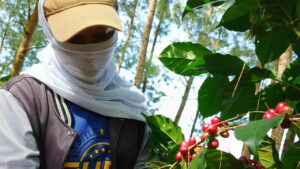
Crops considered suitable for agroforestry include durian, mango, mangosteen, and jackfruit, which can be grown alongside cacao and coffee. The ADB noted the practice of coconut-pineapple multistory systems in Cavite, and coffee-cocoa multistory systems in Mindanao.
However, the ADB said wider adoption in the Philippines remains constrained by high upfront costs, delayed financial returns, limited access to credit, and weak market linkages.
“The poorest farmers are constrained by an inability to suffer a short-term reduction in yields, short planning horizons, high discount rates, aversion to uncertainty, and availability of land, labor, and capital at key times of the year,” it said.
The ADB said smallholder farmers often lack financing for establishing seedlings and early maintenance, while returns from tree-based systems may take years to materialize.
The bank said targeted public support will be critical to address these barriers, including concessional financing, conditional cash transfers, and payments for ecosystem services.
The ADB said financial institutions, including the Land Bank of the Philippines, could play a key role in developing loan products suited to longer investments in agroforestry.
Greater private sector participation, particularly from agribusinesses sourcing coffee, cacao, and other tree-based commodities, could also help strengthen market access and encourage wider adoption. — Vonn Andrei E. Villamiel