
Mike Fox

When the US Constitution was first drafted in 1787, it didn’t include a specific declaration of individual rights. Many of the Framers argued that the Constitution’s structure of limited government and separation of powers was sufficient to protect citizens. However, Anti-Federalists, who feared a powerful central government, demanded greater assurances.
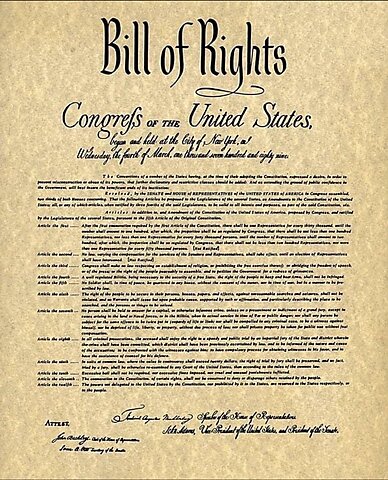
To ensure ratification of the Constitution, Federalists agreed to add a bill of rights. James Madison, drawing upon earlier documents including the Virginia Declaration of Rights, drafted a series of amendments. On December 15, 1791—234 years ago today—the first 10 amendments were ratified, forever enshrining key protections for individuals against government overreach. These amendments cover everything from freedom of speech and religion to the right to a public trial by an impartial jury and protections against unreasonable searches and seizures and cruel and unusual punishment.
The Bill of Rights devotes more space to criminal procedure than any other topic—and that’s no accident. The Framers understood the threat posed by a despotic regime and went to great lengths to ensure that the tyranny they fled wouldn’t be resurrected in the New World.
Depriving a human being of their liberty was supposed to be a monumental undertaking. It was intended to be arduous, time-consuming, and expensive. Starting in the 19th century, state courts began growing frustrated with the slow-moving process and what they saw as procedural burdens—exacerbated by the rise of professional prosecutors and the criminal defense bar. The Sixth Amendment’s right to counsel, recognized by the Supreme Court in the 1963 decision in Gideon v. Wainwright, fast became a thorn in the side of the carceral state. From Prohibition and the war on drugs to the social turmoil of the 1960s and 1970s, the Supreme Court began to sidestep crucial constitutional safeguards in favor of meeting the moment—placing political expediency over the rights of the accused.
Nowadays, the proliferation of criminal law coupled with the tools available to prosecutors means that we’re nearly all unconvinced felons. If the government wants to make you a criminal, all they have to do is name the crime. The jury trial right that the Constitution guarantees can be waived—as it often is due to highly coercive plea bargaining. From the imposition of pretrial detention and the trial penalty to the ability to threaten friends and family and to induce cooperation, there’s nothing short of physical torture that prosecutors can’t do to elicit guilty pleas.
And when it isn’t waived, you get a curated jury—that is, a jury not apprised of its historic injustice-preventing powers. This means that criminal juries today are far less valuable than juries were during the Founding era. The right to a grand jury indictment in federal court? Well, that, too, can be waived to facilitate a plea bargain. The right to the effective assistance of counsel? You can waive that, too, but even when you don’t, it’s often cast as little more than a promise that’ll go unfulfilled. The idea enshrined in the Tenth Amendment that the federal government is one of only enumerated powers and that most criminal law is reserved to states with general police powers? Well, that’s farcical. And when the state and feds both charge you for conduct arising from of the same set of facts, good luck arguing that the second prosecution is barred by the Fifth Amendment’s Double Jeopardy Clause. What was meant to be an absolute bar has become an affirmative defense that doesn’t even apply to cases with dual sovereigns because the justices invented an exception out of whole cloth.
The history of the Bill of Rights is a history of struggle—between the state’s desire for efficiency and control and the individual’s right to liberty and fair procedure. As the tools of prosecution have sharpened and the loopholes have widened to swallow the rules, the protections that the Anti-Federalists demanded have become increasingly fragile. The events of recent years serve as a reminder that without vigilant defense of procedural rights—not just substantive ones—the parchment barriers the Framers erected may not be enough to hold back the tide of government power.
During the Founding era, the judiciary was entrusted with the solemn duty of shielding the rights of the accused; today, the accused must largely fend for themselves against the encroaching weight of the state. While many modern developments in criminal procedure have merit, we must critically reassess the transition from a legal system defined by finite statutory crimes and jury trials to one in which a prosecutor’s decision to charge is often the final word.
Even in trying times, the United States retains its title as the “land of the free” largely because of the Bill of Rights and a Founding generation that recognized a fundamental truth: The surest path to liberty is a government of limited power.